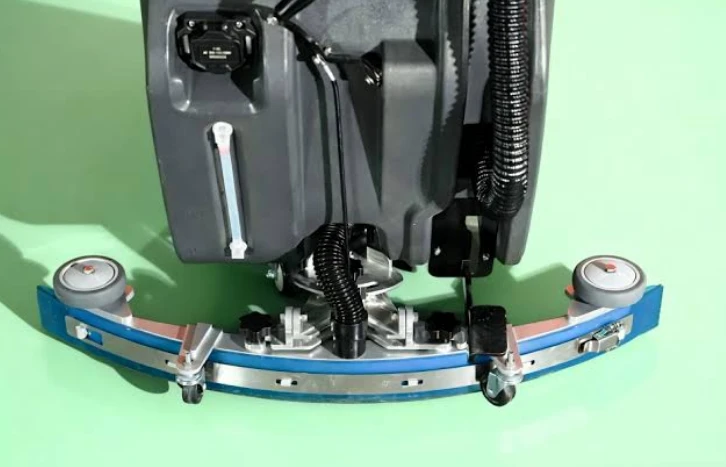
A properly sized floor cleaning machine for a 5,000 m² facility should normally provide 3,000–6,000 m²/h practical productivity, depending on floor type, layout, and cleaning frequency. For daily cleaning within an 8-hour shift, a 700–900 mm ride-on scrubber or a high-capacity walk-behind model is usually suitable. Real operating efficiency is often 50–70% of the rated machine capacity, so selection should be based on actual working conditions rather than catalog numbers.
Choosing the right equipment for a large facility requires calculating the relationship between floor area, cleaning speed, tank capacity, and operator time. A 5,000 m² site may include warehouses, factories, retail spaces, parking areas, or public buildings, and each environment creates different cleaning requirements. A machine designed for a small commercial space may require several hours of repeated passes, while an oversized industrial unit may increase purchase and maintenance costs without improving cleaning results.
“For a 5,000 m² facility, the machine should normally be selected according to practical coverage rates rather than maximum laboratory specifications.”
Manufacturers often publish theoretical cleaning rates based on continuous operation at full speed. In real facilities, machines usually operate at 50–70% efficiency because of turning, stopping, refilling water, changing areas, and avoiding obstacles. For example, a scrubber rated at 5,000 m²/h may realistically clean around 2,500–3,500 m²/h depending on building conditions.
The first calculation should consider the required daily cleaning output.
| Facility Size | Cleaning Time | Required Practical Productivity |
|---|---|---|
| 5,000 m² | 8 hours | About 625 m²/h |
| 5,000 m² | 4 hours | About 1,250 m²/h |
| 5,000 m² | 2 hours | About 2,500 m²/h |
If the facility requires cleaning within half a working day, a higher-capacity machine is needed. A suitable floor cleaning machine for 5000 square meters should usually provide at least 2,000–3,000 m²/h of practical productivity to avoid excessive operating time.
Machine size depends heavily on floor layout. Open warehouses with wide aisles allow larger machines to operate efficiently, while offices and commercial buildings with furniture, corridors, and narrow spaces often require smaller units.
A comparison of common machine categories shows the differences:
| Machine Type | Cleaning Width | Practical Coverage Rate | Typical Application |
|---|---|---|---|
| Compact walk-behind scrubber | 350–500 mm | 800–1,800 m²/h | Small commercial areas |
| Medium walk-behind scrubber | 500–700 mm | 1,500–3,000 m²/h | Schools, stores, workshops |
| Ride-on scrubber | 700–900 mm | 3,000–6,000 m²/h | Warehouses, factories |
| Large industrial scrubber | 900+ mm | 5,000+ m²/h | Airports, production facilities |
For a 5,000 m² warehouse, a ride-on scrubber is often more efficient because the operator can maintain higher average speed and cover wider paths. Studies from industrial cleaning operations have shown that ride-on equipment can reduce cleaning labor time by approximately 30–50% compared with similar walk-behind machines when used in large open areas.
The cleaning path width also affects the number of passes required. A machine with a 900 mm cleaning width covers approximately 30–40% more floor area per pass than a 600 mm model under the same operating speed. However, wider machines require more turning space, so they may perform poorly in buildings with narrow aisles.
Battery performance should also match the facility size. Many modern battery-powered scrubbers operate for approximately 3–5 hours per charge depending on brush pressure, motor load, and battery technology. A machine working on a 5,000 m² floor may require a battery system capable of completing the cleaning route without frequent charging interruptions.
| Battery Type | Typical Runtime | Maintenance Requirement |
|---|---|---|
| Lead-acid battery | 2–4 hours | Higher maintenance |
| Lithium-ion battery | 3–5+ hours | Lower maintenance |
| High-capacity industrial battery | 5+ hours | Suitable for long shifts |
Water capacity is another factor affecting productivity. Cleaning 5,000 m² may require hundreds of liters of cleaning solution depending on floor condition. Many facilities use water consumption rates between 0.08 and 0.15 liters per square meter, meaning one complete cleaning cycle may use approximately 400–750 liters of solution.
A machine with a small tank may need multiple refills during the day. Each refill requires stopping, transporting the machine, and preparing fresh solution. Larger ride-on scrubbers often include 100–200 liter solution tanks, allowing longer continuous operation.
Floor material changes the machine requirements as well. Smooth surfaces such as polished concrete, vinyl, and epoxy floors usually require lower brush pressure and fewer passes. Rough concrete surfaces in factories or warehouses may need stronger brush motors and slower cleaning speeds.
| Floor Type | Recommended Features |
|---|---|
| Polished concrete | Standard brush pressure, efficient vacuum system |
| Epoxy flooring | Soft brush options, controlled water use |
| Textured concrete | Higher brush pressure, durable components |
| Tile flooring | Balanced brush pressure and strong recovery system |
Cleaning frequency also affects equipment selection. A facility cleaned once per week may require stronger cleaning performance because dirt accumulation is higher. A site cleaned every day may prioritize speed and water efficiency. In many commercial buildings, daily cleaning schedules introduced after 2020 increased demand for machines with faster operation and easier maintenance.
Maintenance planning should be included when selecting equipment. A scrubber operating 5 days per week can accumulate more than 1,000 working hours annually. Brush replacement, squeegee inspection, battery checks, and filter cleaning influence long-term operating costs.
“A machine that matches the facility size usually requires fewer working hours, fewer repairs, and fewer repeated cleaning passes.”
The machine control system also affects daily performance. Modern units may include adjustable water flow, brush pressure settings, battery monitoring, and automatic speed control. These functions help operators maintain consistent cleaning quality across different floor areas.
For facilities with mixed environments, a flexible machine may be more practical than selecting several specialized units. A medium ride-on scrubber with adjustable settings can handle warehouses, corridors, and open production areas while keeping equipment management simpler.
Many professional suppliers provide different sizes of commercial cleaning machines, including compact scrubbers and industrial models suitable for large buildings. Product ranges can be reviewed through manufacturers such as floor cleaning machines designed for different coverage requirements.
The selection process for a 5,000 m² facility should include several measurable factors:
| Evaluation Factor | Recommended Range |
|---|---|
| Practical productivity | 2,000–6,000 m²/h |
| Cleaning width | 600–900 mm |
| Runtime | 3–5 hours minimum |
| Solution tank | 80–150 liters |
| Annual operation | 500–1,500 hours |
A well-matched machine reduces unnecessary labor hours and keeps cleaning schedules stable. For most 5,000 m² facilities, a medium or large ride-on scrubber provides a good balance between coverage speed, operator comfort, and maintenance requirements, while walk-behind models remain suitable when the building contains many narrow spaces or complex layouts.